

LIFE PHOENIX, Spain: Containerized Ozone System for Advanced Water Reuse
Containerized Ozone Generation for Advanced Water Reuse Research
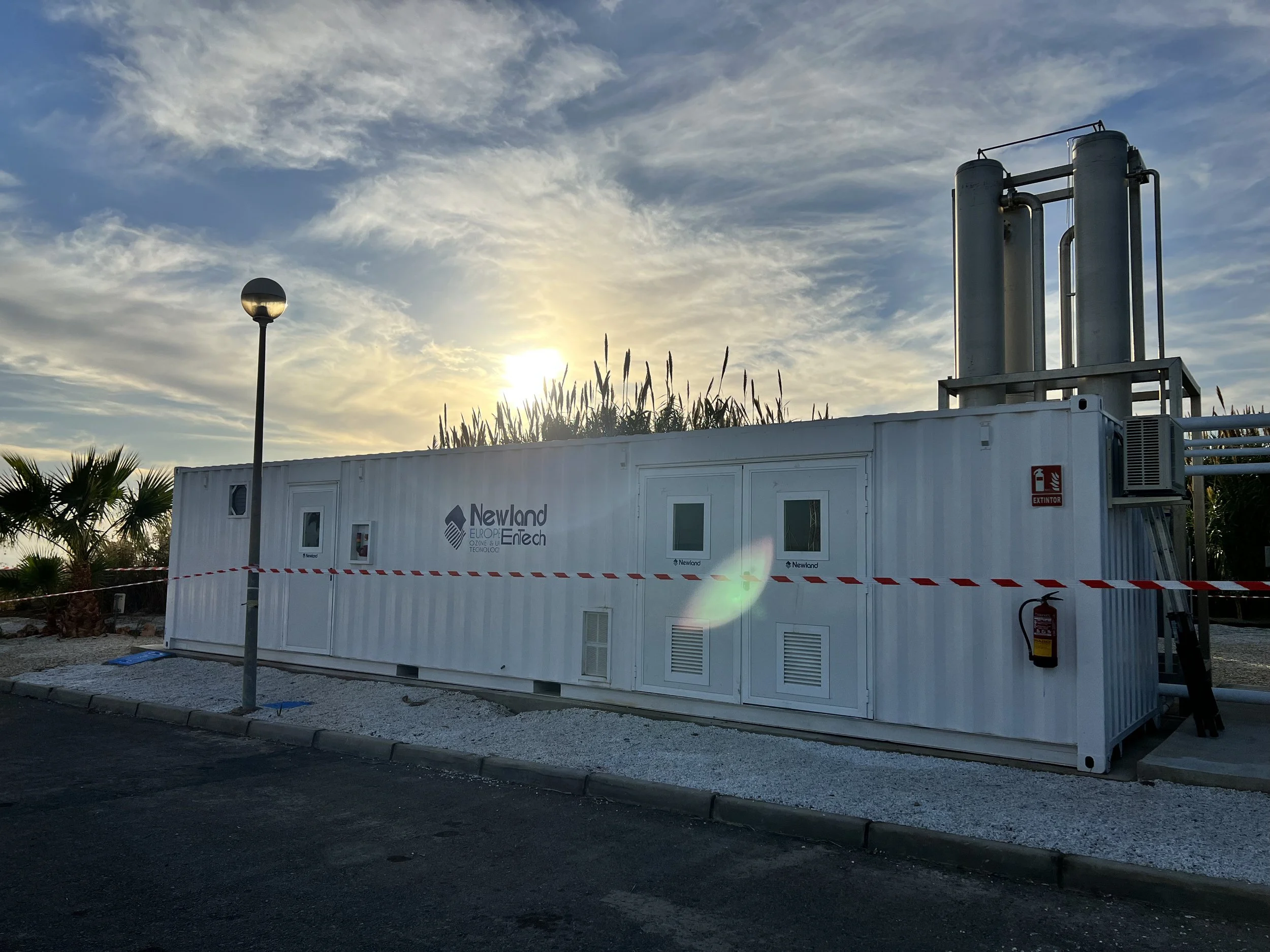
Longking supplied a containerized ozone generation system for the European LIFE PHOENIX project in Spain, supporting research into advanced disinfection, oxidation and wastewater-reuse treatment strategies.
The Longking package incorporated PSA oxygen generation and two ozone generators, providing a compact and integrated ozone source for the project’s flexible pilot-treatment platform.
LIFE PHOENIX was developed to evaluate flexible multi-barrier treatment combinations for the reuse of secondary municipal wastewater, with a particular focus on producing reclaimed water suitable for agricultural applications.
Within the overall demonstration platform, the technologies evaluated included ozone generation, advanced UV-based oxidation and O₃/H₂O₂ advanced oxidation, together with different pretreatment and online-monitoring strategies.
The project therefore provides a relevant Longking reference for applications involving containerized ozone systems, pilot-scale advanced treatment, water reuse and the integration of ozone within multi-barrier treatment trains.
Project Scope & Key Data
LIFE PHOENIX was developed as a European demonstration project focused on flexible multi-barrier treatment strategies for wastewater reuse, with particular emphasis on producing reclaimed water suitable for agricultural applications.
Longking contributed to the project with a containerized ozone generation package designed to support the oxidation and disinfection stages of the pilot treatment platform.
Key Project Data
Project: LIFE PHOENIX
Project reference: LIFE19/ENV/ES/000278
Program: European Union LIFE Programme
Country: Spain
Application: Advanced wastewater treatment and water reuse
Source water: Secondary municipal wastewater effluent
Reuse objective: Agricultural water reuse
Treatment concept: Flexible multi-barrier pilot platform
Longking scope: Containerized ozone generation system
Ozone generation: 2 ozone generators
Oxygen supply: On-site PSA oxygen generation
Operation: Fully automated ozone production and dosing control
Regulatory context: EU water-reuse requirements
Longking Supply
Longking supplied the ozone-generation package, not the complete LIFE PHOENIX treatment platform.
The supplied system included:
Containerized ozone-generation unit
Two ozone generators
PSA oxygen generation
Automated ozone production
Ozone dosing control
Integrated package for rapid installation and commissioning
The containerized concept provided a compact and pre-integrated ozone source that could be connected to the wider experimental treatment train.
LIFE PHOENIX Multi-Barrier Platform
The wider LIFE PHOENIX project evaluated different combinations of advanced treatment technologies rather than relying on a single process.
Technologies investigated within the project included:
Ozone
Advanced UV-based oxidation
O₃/H₂O₂ advanced oxidation
Different pretreatment technologies
Online water-quality monitoring
Additional treatment barriers depending on the demonstration scenario
This flexible architecture allowed different treatment combinations to be evaluated according to the required reclaimed-water quality.
Why the Project Matters
Water reuse requires treatment systems that can respond to variable secondary effluent quality while maintaining reliable microbiological and chemical performance.
LIFE PHOENIX therefore provides a valuable demonstration environment for studying how individual technologies can be integrated into multi-barrier treatment trains rather than evaluated in isolation.
For Longking, the project is particularly relevant as a reference for containerized ozone generation, advanced water reuse and integration of ozone within flexible pilot and demonstration systems.
Why Ozone Is Relevant for Water Reuse
Water reuse applications require treatment systems capable of addressing both microbiological risks and residual chemical contaminants that may remain after conventional secondary treatment.
Ozone can contribute to this objective by providing a strong oxidation step that can be integrated with other treatment barriers according to the required reclaimed-water quality.
Oxidation of Residual Organic Compounds
Secondary wastewater effluent can contain residual organic compounds that are not fully removed during biological treatment.
Ozone can oxidize selected compounds and transform part of the remaining organic load, depending on:
Water quality
Ozone dose
Ozone demand
Contact time
Compound reactivity
Process conditions
The effectiveness of ozonation therefore depends on the actual wastewater matrix and treatment objective.
Microbial Inactivation
Ozone can also contribute to microbial inactivation when the required dissolved ozone concentration and effective contact time are achieved.
For water-reuse applications, this can provide an additional treatment barrier upstream of or in combination with other disinfection technologies.
The actual disinfection performance must be evaluated according to the target microorganisms, water quality and applicable reuse requirements.
Supporting Multi-Barrier Treatment
Ozone is particularly relevant in reuse schemes because it can be integrated with other technologies rather than used as a standalone treatment stage.
A treatment train may combine:
pretreatment → filtration → ozone → UV or advanced oxidation → final polishing / monitoring
The exact sequence depends on the required reclaimed-water quality and the pollutants or microorganisms that must be controlled.
Ozone as a Precursor to Advanced Oxidation
Ozone can also be combined with other oxidants or energy sources to create advanced oxidation processes (AOPs).
In LIFE PHOENIX, combinations such as O₃/H₂O₂ and advanced UV-based oxidation were evaluated within the wider pilot platform.
These processes are designed to enhance the formation of highly reactive oxidizing species and can extend treatment beyond conventional ozonation alone.
Water Quality Determines Ozone Demand
The ozone dose required for one reclaimed-water application cannot be transferred directly to another.
Important design parameters include:
Dissolved organic matter
Ozone demand
pH
Water temperature
Target compounds
Required microbial performance
Downstream treatment stages
Representative water-quality data are therefore essential before defining the ozone-generation and dosing requirements.
Integration Matters More Than Ozone Capacity Alone
In water-reuse projects, the nominal ozone generator capacity is only one element of the treatment design.
The overall performance depends on the coordination of:
ozone generation + dosing + gas-liquid transfer + contact conditions + monitoring + downstream treatment
This is why pilot and demonstration projects such as LIFE PHOENIX are valuable for evaluating how ozone performs within a complete treatment train rather than as an isolated technology.
Containerized Ozone System & PSA Oxygen Generation
For LIFE PHOENIX, Longking supplied the ozone-generation stage as a containerized package combining on-site oxygen production with two ozone generators.
This configuration provided the pilot platform with a compact and integrated ozone source suitable for advanced wastewater-treatment and reuse research.
On-Site PSA Oxygen Generation
The system uses Pressure Swing Adsorption (PSA) to produce oxygen on site for ozone generation.
Instead of relying on an external liquid-oxygen supply, the PSA unit provides the ozone generators with a dedicated oxygen source generated directly at the treatment site.
For pilot and demonstration applications, this type of configuration can provide advantages such as:
On-site oxygen availability
Reduced dependence on bulk oxygen deliveries
Integrated operation with the ozone system
Flexible deployment at different treatment sites
Compact system architecture
The PSA system must be designed according to the required oxygen flow, purity and operating conditions of the ozone generators.
Two Ozone Generators
The LIFE PHOENIX package incorporates two ozone generators, allowing ozone production to be integrated into the different experimental treatment configurations evaluated by the project.
Using multiple generators can also provide greater operational flexibility than relying on a single production unit, particularly where pilot operating conditions and treatment requirements may vary.
The actual ozone production setpoint is defined according to the required experimental conditions rather than simply operating continuously at maximum output.
Containerized Integration
The main ozone-generation equipment is integrated within a dedicated containerized package.
Depending on the final configuration, a containerized ozone system can integrate:
PSA oxygen generation
Ozone generators
Cooling equipment
Electrical panels
Instrumentation
Process controls
Internal piping
Ventilation
Ozone detection
Safety interlocks
External utility and process connections
Pre-integration simplifies the connection of the ozone package to the wider pilot-treatment platform.
Suitable for Pilot & Demonstration Projects
Containerization is particularly useful for research, pilot and demonstration projects because it allows a significant part of the system to be assembled and tested before delivery.
This can support:
Rapid installation
Defined process interfaces
Modular deployment
Simplified commissioning
Equipment protection
Potential relocation or reuse in future trials
These characteristics make containerized ozone systems well suited to projects where treatment configurations may evolve during the research programme.
Integrated Ozone Production & Dosing
The ozone package must coordinate ozone production with the operating requirements of the treatment process.
This requires the integration of:
PSA oxygen production → ozone generation → cooling → ozone delivery → dosing control → process monitoring → safety
For LIFE PHOENIX, this integrated architecture allowed the ozone system to function as a flexible treatment component within the wider multi-barrier pilot platform.
Automation, Monitoring & Experimental Flexibility
Pilot and demonstration projects require a higher degree of operating flexibility than many conventional full-scale installations.
For LIFE PHOENIX, the ozone package had to operate as part of a research platform where treatment conditions could change according to the experimental campaign and the selected multi-barrier configuration.
Automated Ozone Production
The ozone system is designed for automated production and dosing control, allowing ozone output to be adjusted according to the operating requirements of the pilot treatment process.
This helps avoid operating permanently at maximum production when lower ozone demand is required for a specific trial.
Adaptation to Different Test Conditions
Experimental water-reuse projects may evaluate different:
Water qualities
Flow conditions
Ozone doses
Treatment sequences
Contact conditions
Downstream processes
The ozone system must therefore be capable of adapting to changing operating setpoints while remaining within the defined equipment limits.
Process Monitoring
Typical monitored parameters in an integrated ozone package can include:
Ozone production
Oxygen-generation status
Feed-gas conditions
Cooling-system conditions
Electrical operating parameters
Alarm status
Safety signals
Process commands
The exact instrumentation depends on the final package configuration and the monitoring requirements of the research programme.
Integration with the Pilot Platform
The ozone package must exchange operating information with the wider treatment platform so that ozone production can be coordinated with the selected experimental scenario.
This allows the treatment sequence to be managed as an integrated process rather than as a collection of independent pieces of equipment.
Repeatability of Experimental Conditions
Research and demonstration projects require operating conditions that can be reproduced and compared between different tests.
Automated control helps improve experimental consistency by allowing defined ozone-production and dosing conditions to be repeated under similar hydraulic and water-quality scenarios.
This is particularly important when comparing different multi-barrier treatment combinations.
Safety During Experimental Operation
Even in pilot applications, ozone safety remains a fundamental design requirement.
Depending on the final package configuration, the control logic can coordinate:
Ambient ozone detection
Ventilation
Feed-gas availability
Cooling status
Equipment alarms
Emergency shutdown
External process interlocks
The objective is to maintain safe operation while preserving the flexibility required for the experimental programme.
Flexible Platform for Water-Reuse Research
The combination of PSA oxygen generation, two ozone generators, automated operation and containerized integration makes the Longking package suitable for treatment programmes where operating conditions may evolve during the project.
For LIFE PHOENIX, this flexibility allowed ozone to function as one of the adjustable treatment stages within a broader multi-barrier water-reuse research platform.
Why LIFE PHOENIX Is a Relevant Longking Reference
LIFE PHOENIX is a relevant Longking reference because it combines advanced water-reuse research with a containerized ozone-generation system designed for flexible operation within a multi-barrier treatment platform.
The project demonstrates how ozone can be integrated not as an isolated technology, but as one adjustable treatment stage within a broader process designed to evaluate different combinations of oxidation, disinfection and polishing.
Advanced Water-Reuse Application
The project is focused on the treatment of secondary municipal wastewater for agricultural reuse, an application where treatment reliability and adaptability are particularly important.
This makes LIFE PHOENIX relevant for future projects involving:
Municipal wastewater reuse
Agricultural water reuse
Advanced oxidation
Disinfection
Pilot and demonstration treatment systems
Multi-barrier treatment strategies
Containerized Ozone Generation
The Longking package combines PSA oxygen generation, two ozone generators and automated operation within a containerized system.
This architecture provides a compact and integrated ozone source that can be connected to different process configurations while reducing the amount of field assembly required.
Flexible Experimental Operation
Unlike a conventional system designed around one fixed operating point, LIFE PHOENIX required the ozone package to support varying experimental conditions.
The ability to adjust ozone production and dosing makes the system particularly suitable for evaluating different:
Treatment sequences
Ozone doses
Water qualities
Hydraulic conditions
Downstream technologies
Integration into a Multi-Barrier Treatment Platform
One of the main values of the project is the integration of ozone within a broader treatment strategy.
LIFE PHOENIX evaluates how technologies such as ozone, UV-based advanced oxidation and O₃/H₂O₂ can be combined with other treatment barriers to achieve the required reclaimed-water quality.
This provides a practical demonstration of how advanced water-treatment technologies can be engineered as complementary process stages rather than standalone solutions.
Relevant Experience for Future Projects
LIFE PHOENIX provides useful experience for projects requiring:
Containerized ozone systems
PSA-fed ozone generation
Water-reuse treatment
Pilot-scale advanced treatment
Research and demonstration platforms
Flexible multi-barrier integration
For Longking, the project represents a practical reference for the integration of ozone-generation technology into advanced, modular and adaptable water-treatment systems.
Need Support with an Advanced Water-Reuse Project?
Longking EnTech Europe supports municipal and industrial projects requiring ozone generation, advanced oxidation and integration within multi-barrier water-reuse treatment trains.
Our engineering scope can include:
Ozone generation
PSA oxygen systems
Containerized ozone packages
Cooling systems
Ozone dosing and process integration
Instrumentation and automation
Safety systems
Pilot and demonstration units
Integration with complementary treatment technologies
For water-reuse projects, the treatment concept should be defined from the actual water quality, reuse objective, regulatory requirements, oxidation targets and downstream treatment strategy.
Contact our team with your project data and treatment requirements.