Industrial Ozone & UV Water Treatment Solutions
Advanced Treatment for Process Water, Wastewater & Water Reuse
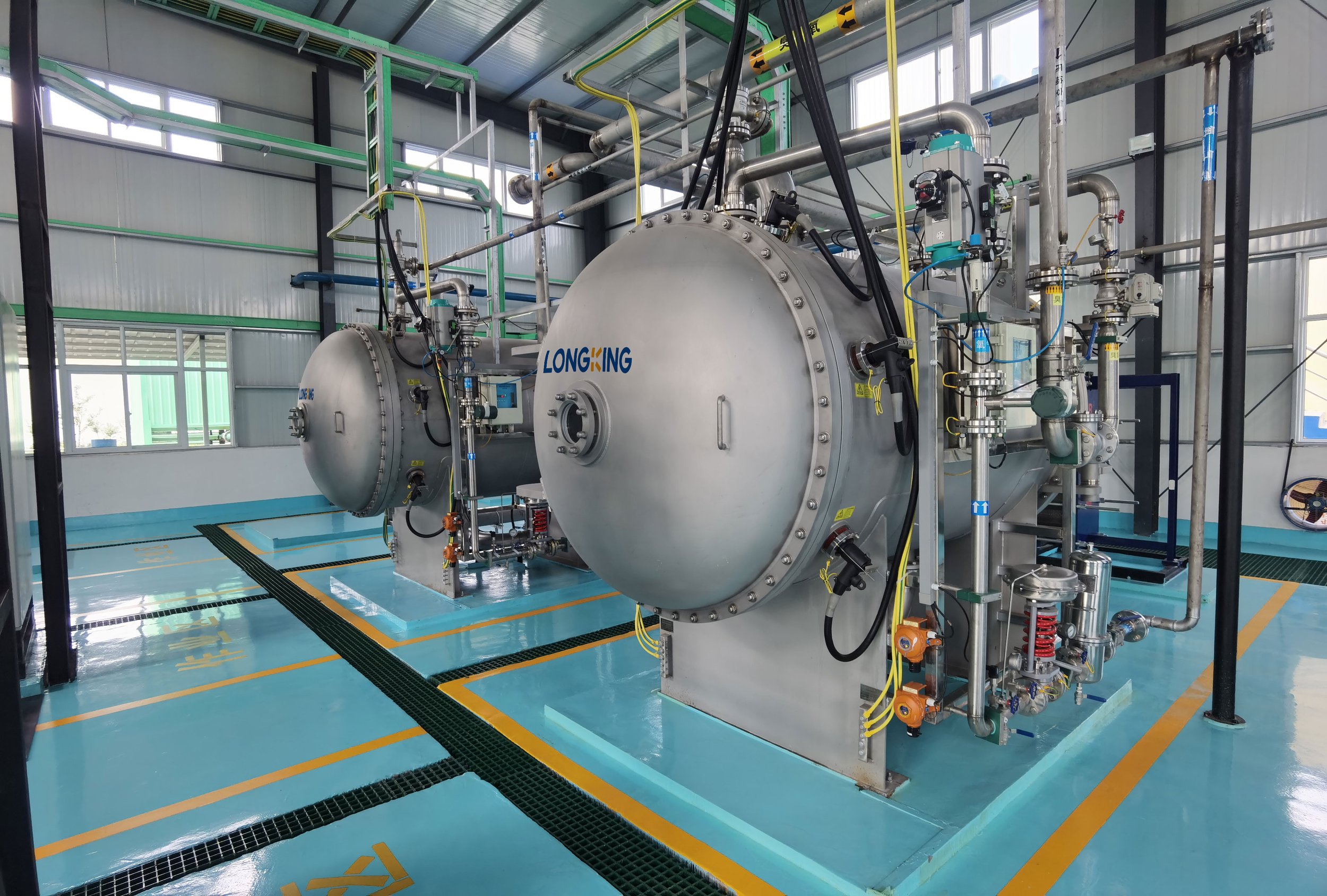
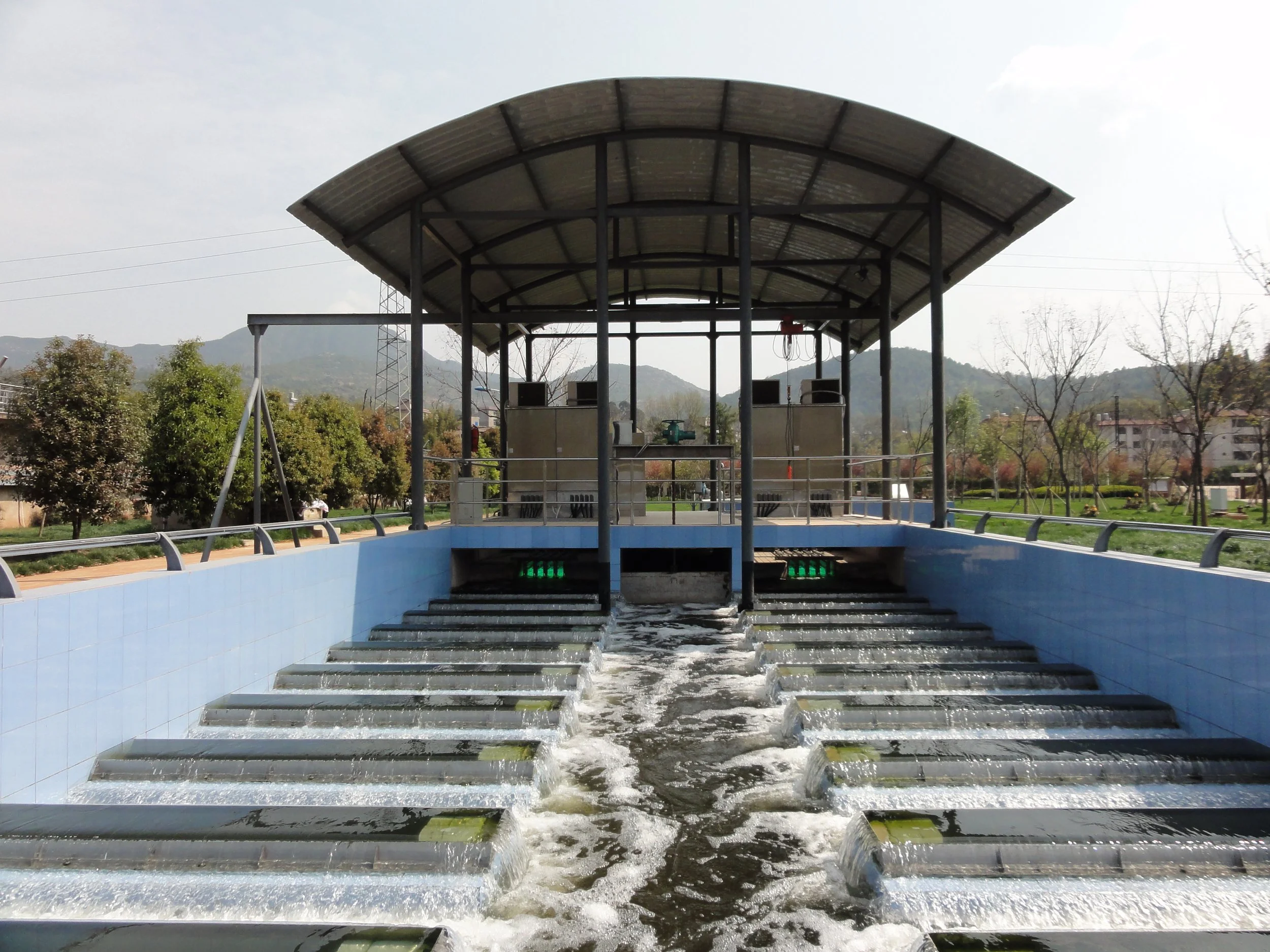
At Longking EnTech Europe, we develop ozone, UV disinfection and Advanced Oxidation Process (AOP) solutions for industrial water and wastewater applications.
Our engineering approach is based on the specific water matrix, treatment objectives, process requirements and operating conditions of each application, supporting industries with solutions for process water treatment, wastewater polishing, oxidation of target contaminants, disinfection and water reuse.
From process assessment and feasibility studies to system design, automation, FAT/SAT, commissioning and lifecycle support, Longking combines specialized water treatment engineering with the manufacturing and R&D capabilities of the Longking Group.
Engineering Solutions for Industrial Water Treatment
Industrial water treatment requirements vary significantly depending on the water matrix, production process, contaminants, hydraulic conditions and treatment objectives.
Longking EnTech Europe develops project-specific ozone, UV and AOP solutions, supporting customers from early process assessment and feasibility studies through detailed engineering, equipment supply, commissioning and lifecycle services.
Our Engineering Capabilities
Process Analysis & Feasibility Studies – assessment of treatment objectives, water characteristics and suitable process configurations.
Pilot Testing & Industrial Trials – when required to validate treatment performance or optimize process conditions.
Customized System Engineering – equipment configuration, hydraulics, instrumentation and integration adapted to project requirements.
PLC & HMI Automation – customized control philosophy, alarms, interlocks and operating sequences.
SCADA Integration – communication with plant control systems through standard industrial protocols.
SENTINEL Remote Monitoring – performance follow-up, alarm analysis and remote troubleshooting support.
Project-Specific Safety & Compliance – design adapted to applicable CE requirements, ATEX conditions and client HSE standards, where relevant.
FAT/SAT & Commissioning Support – structured testing, documentation and start-up assistance.
Our approach combines process engineering, equipment design, automation and lifecycle support to develop reliable industrial water treatment solutions adapted to each application's technical and operational requirements.

Industrial Wastewater Treatment
Ozone & AOP for Advanced Oxidation and Effluent Polishing
Industrial wastewater can contain recalcitrant organic compounds, colour, odour, toxic or inhibitory substances and other contaminants that are difficult to treat using conventional processes alone.
Longking EnTech Europe develops ozone and Advanced Oxidation Process (AOP) solutions according to the specific wastewater matrix, treatment objective and downstream process configuration. Depending on the application, ozone can be used as a pre-treatment, intermediate oxidation step or final polishing stage.
Key Applications
Micropollutant & Recalcitrant Compound Oxidation: Ozone and AOP can support the oxidation of selected pharmaceuticals, pesticides, phenols and other difficult organic compounds, with performance depending on their reactivity and the wastewater matrix.
COD, TOC & AOX Reduction: Oxidation can contribute to the reduction or transformation of selected organic loads and halogenated compounds, particularly as part of an integrated treatment train.
Improved Biodegradability: Ozone can transform part of the recalcitrant organic matter into more biodegradable compounds, supporting subsequent biological treatment where appropriate.
Colour & Odour Reduction: Ozonation can be highly effective for decolourisation and oxidation of odour-causing compounds in suitable industrial effluents.
Treatment of Specific Contaminants: Applications involving compounds such as cyanides, phenols or other toxic/inhibitory substances must be evaluated individually according to concentration, water chemistry and required treatment performance.
Water Reuse & Advanced Polishing: Ozone, AOP and UV can form part of a multi-barrier treatment process for industrial water reuse, together with filtration, biological treatment, activated carbon or other technologies as required.
Process Development & Validation
For complex industrial matrices, Longking can support feasibility studies, laboratory or pilot testing and process optimization before defining the final treatment configuration.
The final design considers parameters such as flow, COD/TOC, target contaminants, pH, alkalinity, temperature, ozone demand, required removal performance and downstream treatment stages.
Ozone generation, injection, contact and control systems are then engineered according to the required process conditions, with instrumentation, automation and safety systems integrated into the overall treatment concept.

Pulp & Paper
Ozone for Pulp Bleaching & Effluent Treatment
The pulp and paper industry combines demanding production requirements with significant challenges related to chemical consumption, colour, organic load and wastewater quality.
Ozone is a powerful oxidant that can be integrated into both pulp bleaching sequences and wastewater treatment, supporting mills in the optimization of bleaching chemistry while providing an additional tool for advanced effluent treatment.
In bleaching applications, ozone can support ECF (Elemental Chlorine Free) and TCF (Totally Chlorine Free) process configurations, depending on pulp characteristics, mill process and required final brightness.
Key Applications
Pulp Bleaching: Ozone can be incorporated as an oxidation stage to support lignin removal and brightness development, reducing reliance on conventional chlorine-based bleaching chemicals.
AOX Reduction: By reducing the use of chlorinated bleaching chemicals, ozone-based process configurations can contribute to lower formation and discharge of adsorbable organic halides (AOX).
Chemical Consumption Optimization: Integration of ozone into the bleaching sequence can help optimize the overall bleaching chemistry and chemical consumption, depending on pulp type, process conditions and production objectives.
Colour Removal: Ozone is particularly effective for the oxidation of chromophoric compounds responsible for colour in pulp and paper process waters and effluents.
Wastewater Oxidation & Polishing: Ozone and AOP can be applied to the treatment of selected recalcitrant organic compounds, residual colour and final effluent polishing where conventional treatment alone does not achieve the required result.
Improved Biodegradability: Partial oxidation of complex organic compounds can increase their biodegradability, allowing ozone to be integrated upstream of biological treatment in suitable applications.
Process Integration
The optimum ozone treatment depends on the pulp type, production capacity, COD/TOC, colour, target compounds, existing treatment process and required final water quality.
Longking develops the complete ozone treatment concept, including ozone generation, gas preparation, injection and contact systems, process instrumentation, automation and safety, with the final configuration adapted to the specific requirements of each mill.
For complex wastewater applications, laboratory or pilot testing can be used to confirm ozone demand, oxidation performance and the most appropriate treatment configuration before final system sizing.

Food & Beverage
Ozone & UV for Process Water, Hygiene and Water Reuse
Food and beverage production requires consistent control of process water quality, microbiological risk and hygiene at critical points of the production line.
Longking EnTech Europe develops ozone and UV solutions for process water treatment, beverage bottling, food washing and other applications where controlled disinfection and oxidation can support reliable plant operation.
Key Applications
Process Water Treatment: Ozone and UV can be applied to water disinfection and oxidation, with the treatment configuration defined according to source water quality and production requirements.
Bottling & Rinsing Water: Ozonated water can support bottle, container and line rinsing applications, helping maintain microbiological control at critical points of the bottling process.
CIP & Biofilm Control: Ozone can be integrated into selected cleaning and sanitation strategies to support biofilm control and reduce reliance on conventional chemical treatments, depending on the plant process and validation requirements.
Fruit & Vegetable Washing: Ozone can be applied to recirculated wash water to support microbiological control and oxidation of selected organic compounds, with performance dependent on water quality, organic load, ozone residual and contact conditions.
Water Reuse: Ozone, UV and filtration can form part of a multi-barrier water reuse strategy, where permitted and validated according to the intended use and applicable requirements.
Process Control & Safety
Industrial food applications require controlled operation rather than a fixed ozone dose. Depending on the process, systems can incorporate:
Ozone dissolved residual and/or ORP monitoring
Flow-based ozone production control
Off-gas collection and ozone destruction
Ambient ozone detection and safety interlocks
PLC/HMI control and operating data logging
Microbiological validation under actual plant conditions
The final treatment concept is developed according to the water characteristics, production process, treatment objective and required validation criteria.

Flue Gas Treatment – NOx Oxidation & Odour Control
Beyond water treatment, Longking has extensive experience in the application of ozone for industrial gas treatment, supported by numerous large-scale references across Asia in power generation, petrochemical, refining, steel and other heavy industrial sectors.
Ozone provides a highly reactive oxidation route that can be integrated into existing or new gas treatment processes where NOx oxidation or oxidation of selected odorous compounds is required.
NOx Oxidation
In flue gas treatment, ozone can be used to oxidize NO and other nitrogen oxides into higher oxidation states, which are more readily removed in downstream absorption or scrubbing processes.
This allows the ozone system to operate as part of an integrated denitrification process, rather than as an isolated treatment step.
Typical applications include:
Power generation and industrial boilers
Oil refining and petrochemical plants
Steel and metallurgical industries
Coking and other high-temperature industrial processes
Integration with existing desulfurization and flue-gas treatment systems
System Integration
The ozone production required is determined according to the flue-gas flow, inlet NOx concentration, target oxidation level, ozone utilization efficiency and downstream removal process.
Longking develops the ozone system as part of the complete treatment concept, combining ozone generation, gas handling, injection, automation and safety to meet the operating requirements of continuous industrial plants.
Backed by the full technological, engineering and industrial capabilities of the Longking Group, we bring this proven experience to international projects, delivering integrated ozone solutions for demanding industrial gas treatment applications.

Aquaculture & Recirculating Aquaculture Systems (RAS)
Ozone & UV for Water Quality and Biosecurity
Recirculating Aquaculture Systems require stable control of suspended solids, dissolved organic matter, water clarity and microbiological risk while maintaining conditions compatible with fish health and biological filtration.
Longking EnTech Europe develops ozone and UV treatment solutions for aquaculture and RAS applications, integrating oxidation and disinfection into a controlled multi-barrier water treatment strategy.
Key Applications
Organic Load & Colour Reduction: Ozone can oxidize part of the dissolved organic matter (DOC), colour and selected organic compounds, helping improve water clarity and UV transmittance.
Microbiological Control: UV can provide a controlled disinfection barrier for bacteria, viruses and other microorganisms, with system sizing based on flow, UVT, target organisms and required UV dose.
Biofouling Control: Reduction of dissolved organic load and microbiological pressure can help limit biofouling and improve the stability of downstream equipment and water circuits.
Side-Stream Ozonation: Ozone is typically applied in a controlled side-stream treatment loop, combined with appropriate contact, gas-liquid separation and off-gas destruction.
Water Quality Stabilization: Ozone and UV can complement mechanical filtration, protein skimming and biological treatment as part of an integrated RAS treatment train.
Process Control & Fish Safety
The application of ozone in aquaculture requires strict control to prevent ozone residual from reaching the culture tanks.
Depending on the system, the treatment concept can include:
ORP and/or dissolved ozone monitoring
Flow-based ozone production control
Contact and degassing systems
Off-gas collection and ozone destruction
Ambient ozone detection and safety interlocks
PLC/HMI monitoring and alarm management
Polishing or stripping stages, when required before water returns to the tanks
The design objective is to obtain the benefits of oxidation and improved water quality while ensuring no harmful ozone residual reaches the fish culture system.
Freshwater & Seawater Applications
Freshwater and seawater RAS require different ozone control strategies. In seawater systems, the presence of bromide requires additional attention to oxidation by-products and process control, making conservative setpoints, monitoring and project-specific validation particularly important.
The final treatment configuration is defined according to species, water salinity, flow, TSS, DOC/TOC, UVT, temperature, treatment objectives and existing RAS process configuration.
Cooling Water Treatment
Ozone & UV for Microbiological Control and System Efficiency
Cooling water systems are exposed to microbiological growth, biofilm formation, scaling, corrosion and accumulation of suspended and dissolved contaminants, all of which can affect heat-transfer efficiency, maintenance requirements and operational reliability.
Longking EnTech Europe develops ozone and UV treatment solutions for cooling water applications, integrated into the overall water treatment strategy according to system configuration, make-up water quality, operating conditions and microbiological control requirements.
Key Applications
Microbiological & Biofilm Control: Ozone can support the control of microbial growth and biofilm formation in suitable recirculating cooling water systems, helping maintain cleaner heat-transfer surfaces and water circuits.
Reduced Biocide Dependency: In appropriately designed applications, ozone can help reduce the consumption of conventional oxidizing or non-oxidizing biocides, while maintaining the broader water treatment program required for the installation.
UV Disinfection: UV can be applied at selected points in the cooling water circuit or in side-stream treatment to provide a controlled disinfection barrier without adding a chemical residual, depending on water quality and hydraulic conditions.
Organic Load Control: Ozone oxidation can help reduce selected organic compounds that contribute to biological growth and fouling, depending on the characteristics of the circulating water.
Heat-Transfer Performance: Better control of microbiological fouling and deposits can contribute to maintaining heat-exchanger cleanliness and thermal efficiency, reducing the performance losses associated with fouled surfaces.
Legionella Risk Management
Cooling towers require a comprehensive water management and microbiological control program. Ozone and UV can form part of this strategy, but their application must be integrated with appropriate monitoring, cleaning, maintenance, scale and corrosion control and site-specific operating procedures.
The treatment concept must therefore be defined according to the cooling system design, water chemistry, microbiological risk, applicable regulations and plant water-management strategy.
Engineering & Process Control
Depending on the application, Longking systems can incorporate:
Ozone generation and controlled dosing
ORP and process monitoring
Side-stream ozone or UV treatment
Flow-based control strategies
Ambient ozone detection and safety interlocks
PLC/HMI integration and alarm management
Remote monitoring and operating data analysis
The final configuration is engineered according to the circulating water quality, make-up water, cycles of concentration, temperature, materials, hydraulic conditions and treatment objectives.

Pharmaceutical & Cosmetics
Ozone & UV for Purified Water and High-Purity Process Applications
Pharmaceutical and cosmetic manufacturing requires strict control of water quality, microbiological risk and process hygiene, particularly in purified water storage and distribution systems.
Longking develops ozone and UV solutions that can be integrated into high-purity water treatment and distribution systems according to the required water quality, process configuration and validation strategy.
Key Applications
Purified Water Loop Sanitization: Ozone can be used to support microbiological control and sanitization of storage tanks and distribution loops, with dosage and operating strategy adapted to the specific system requirements.
UV Disinfection: UV can provide an additional microbiological control barrier at selected treatment or distribution points, with system sizing based on flow, UV transmittance and required treatment performance.
Ozone Residual Management: In appropriately designed systems, UV can also be integrated to support ozone residual destruction before selected points of use, when required by the process configuration.
Process Water Treatment: Ozone, UV and AOP technologies can support the treatment of process water and selected organic contaminants, depending on the water matrix and required treatment objective.
Chemical & Cosmetic Processes: Ozone can also be used as an oxidizing agent in selected chemical, pharmaceutical and cosmetic manufacturing processes, where process-specific oxidation is required.
Engineering, Control & Validation
High-purity water applications require the treatment system to be integrated into the plant's overall quality, monitoring and validation strategy.
Depending on the project, Longking systems can incorporate:
Controlled ozone generation and dosing
UV treatment stages
Ozone concentration and process monitoring
PLC/HMI automation and alarm management
Sanitization sequences and operating interlocks
FAT/SAT documentation and commissioning support
Integration with the customer's qualification and validation procedures
The final configuration is defined according to the water quality specification, process requirements, distribution loop design, operating philosophy and applicable regulatory framework.
Quality & Regulatory Environment
Longking equipment can be engineered for integration into pharmaceutical and cosmetic facilities operating under GMP and applicable pharmacopeial requirements, while final compliance and water quality qualification remain dependent on the complete treatment system, plant operation and validated process.

Chemical Industry
Ozone & AOP for Chemical Processes and Industrial Wastewater
The chemical industry presents highly diverse treatment challenges, including recalcitrant organic compounds, toxic or inhibitory substances, high COD loads and process-specific oxidation requirements.
Longking develops ozone and Advanced Oxidation Process (AOP) solutions for chemical manufacturing and wastewater applications, with each treatment concept defined according to the target compounds, water matrix, process conditions and required treatment objective.
Key Applications
Industrial Wastewater Oxidation: Ozone and AOP can support the treatment of selected recalcitrant organic compounds that are difficult to remove using conventional biological or physicochemical processes alone.
COD & TOC Reduction: Oxidation can contribute to the reduction or transformation of selected organic loads, either as an intermediate treatment step or as final effluent polishing.
Treatment of Toxic & Inhibitory Compounds: Applications involving phenols, cyanides and other specific organic or inorganic contaminants can be evaluated individually according to concentration, reactivity and wastewater characteristics.
Improved Biodegradability: Ozone can transform part of the recalcitrant organic matter into more biodegradable compounds, supporting downstream biological treatment where appropriate.
Colour & Odour Control: Ozonation can be applied for decolourisation and oxidation of selected odour-causing compounds in suitable industrial streams.
Chemical Process Applications: Ozone can also be used as a controlled oxidizing agent in selected chemical synthesis and manufacturing processes, where its reactivity provides a suitable alternative or complement to conventional oxidants.
Process Development & Engineering
Chemical applications often require process-specific assessment and validation before final system sizing.
Longking can support:
Feasibility studies and process assessment
Laboratory or pilot testing, when required
Definition of ozone dose, contact conditions and oxidation strategy
Selection of ozone, O₃/H₂O₂, UV or combined AOP configurations
Ozone generation, injection and contact system engineering
Instrumentation, PLC/HMI automation and safety systems
FAT/SAT, commissioning and lifecycle support
The final configuration is developed according to the chemical composition of the stream, target contaminants, flow, COD/TOC, pH, alkalinity, temperature and required treatment performance.